Picture two brothers raised in the same house. They share the platform, the family name and even the 2.0-liter engine. One is calm, efficient and always saving money. The other is more straightforward, simple and no-fuss. That's the 2026 Toyota Corolla Cross lineup, and choosing between them is more interesting than it sounds.
Body: Same Frame, Different Face
Both are compact SUVs, about seven inches shorter than a RAV4, which makes them ideal for city life and for parking spots where bigger SUVs struggle. With 8 inches of ground clearance, they can also handle a gravel road without drama.
Design: Finally, You Can Tell Them Apart
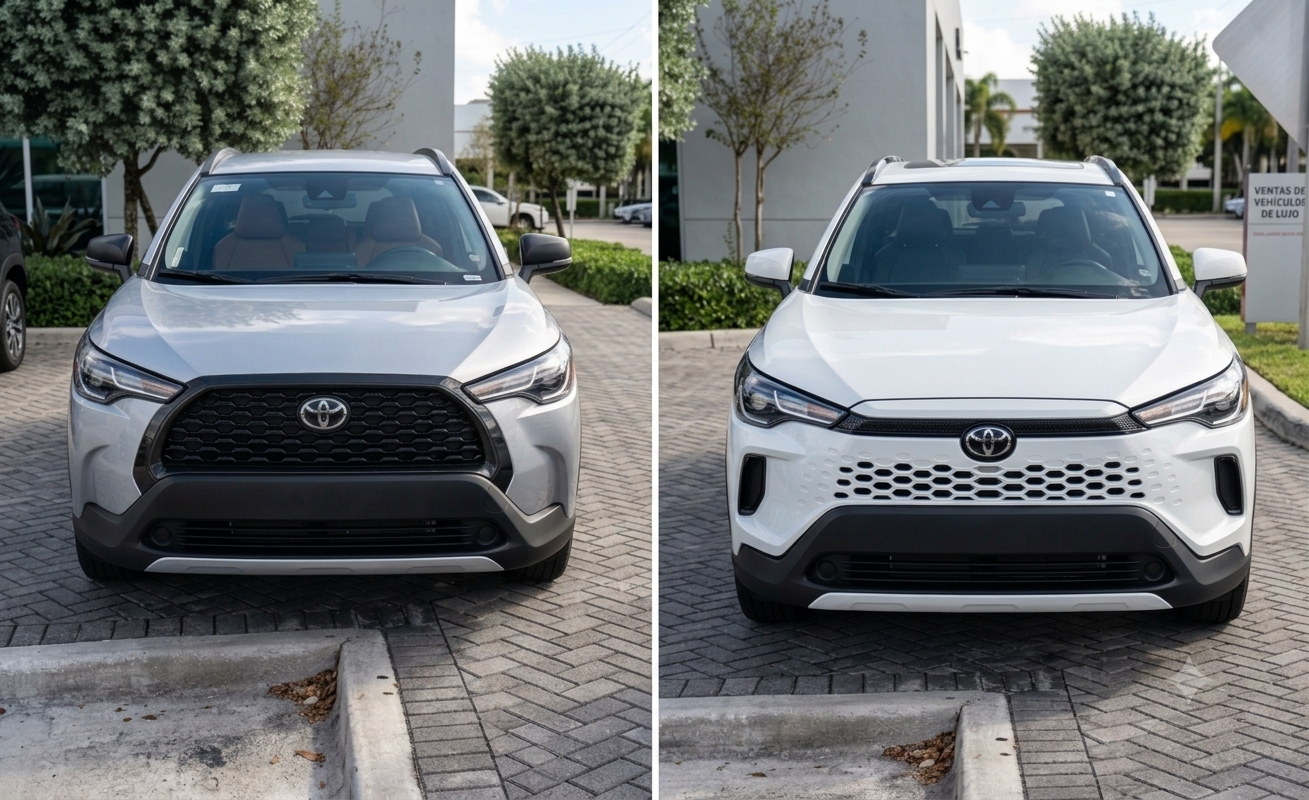
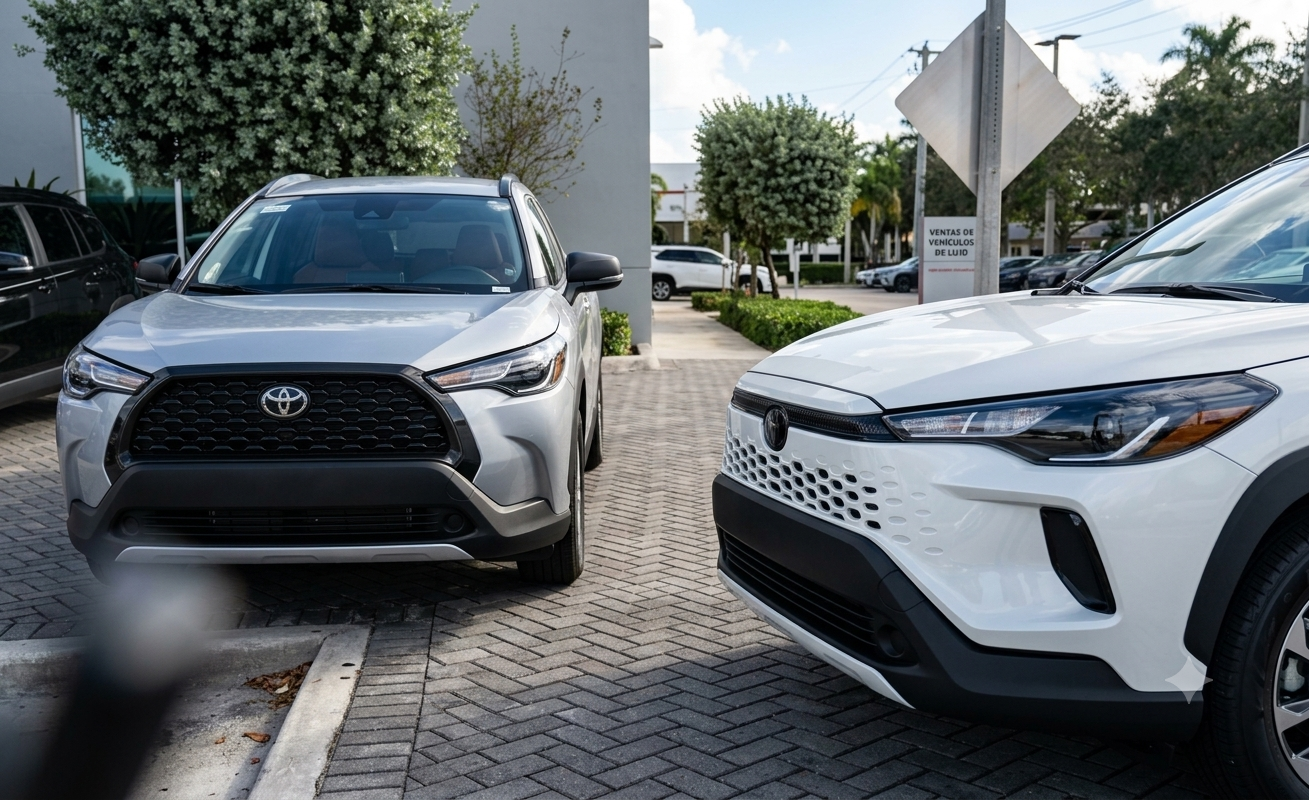
Until last year, showing off the hybrid badge was nearly impossible because the two looked almost identical. For 2026, Toyota gave each one its own face:
- The hybrid gets a clean, aerodynamic front end with a body-colored integrated grille. It looks more modern and tech-forward.
- The gas model keeps a tougher, more rugged character, with a bolder grille insert.
The hybrid also debuts Cavalry Blue, which can be paired with a black roof on the SE and XSE trims. It's the one that turns heads in the parking lot.
Powertrain: A 27-Horsepower Gap
The gas version uses a 2.0-liter four-cylinder making 169 hp and 151 lb-ft of torque, paired with a CVT that has a physical first gear for a more responsive launch. It's available in front-wheel drive or all-wheel drive.
The hybrid uses that same 2.0-liter engine in an Atkinson-cycle setup, backed by three electric motors and Toyota's fifth-generation hybrid system. The result is 196 combined horsepower and standard all-wheel drive at no extra cost.
You never plug the hybrid in. It recharges itself through braking and while you drive. Its AWD comes from an electric motor on the rear axle that kicks in when it detects wheel slip. That's great for rain and slick pavement, but I wouldn't take it on serious off-road trails.
Interior: Practical First, Fancy Second
Both get a redesigned center console with more ergonomic cupholders and extra storage. On the tech side, screens range from a standard 8-inch display up to a 10.5-inch unit on higher trims, and the hybrid XSE adds a 12.3-inch digital gauge cluster.
The good: a comfortable driving position and simple controls. The not-so-good: rear legroom is tight, and some plastics and the headliner feel cheap. Three people can squeeze into the back seat in a pinch, but two will be far more comfortable.
For cargo, the AWD versions (including the hybrid) offer 21.5 cubic feet with the seats up and 44 with them folded down.
Fuel Economy: Where the Hybrid Takes the Trophy
This is the biggest difference between the two. The hybrid delivers 45 mpg in the city, 38 on the highway and 42 combined, with up to 445 miles of range. The front-wheel-drive gas model manages 31 mpg city, 33 highway and 32 combined, with about 397 miles of range.
In short, the hybrid uses roughly a third less fuel. And it isn't just theory: owners report 40 to 43 mpg in real-world driving, while gas AWD owners average 28 to 29. According to Kelley Blue Book, at 15,000 miles a year the hybrid saves about 142 gallons over a gas AWD model, roughly $461 a year with gas at $3.25.
Performance: You Can Feel the Difference
In Edmunds' testing, the hybrid went from 0 to 60 mph in 7.8 seconds, while the gas version took 9.4. That's nearly a second and a half, and you notice it merging onto a highway or passing. The hybrid also pulls away silently in electric mode and transitions to gas power very smoothly. It isn't sporty, but it's comfortable and easy to drive. The gas model gets the job done, though you have to work the engine to get the best out of it.
What About Price?
The gas model starts under $25,000, while the hybrid starts at $30,445. That's a gap of roughly $5,000, though the real difference shrinks if you compare against a gas model with AWD, which is standard on the hybrid.
The Verdict
The hybrid is for you if you drive a lot in the city or rack up many miles each year, want standard all-wheel drive without paying extra, and value a quicker, quieter ride.
The gas model is for you if your priority is the lowest entry price, you drive relatively few miles, or you prefer simpler mechanics.
For most buyers, the hybrid wins: more power, less fuel and standard AWD, all backed by Toyota's reputation for reliability. But if budget rules, the gas model is still an honest SUV with no surprises.